
Your Whole Life Well
Depressive DisordersPonte Vedra Psychologists
Cognitive-behavioral therapy (CBT) for stress, anxiety, & depression.
Depressive Disorders
Introduction: When Life Feels Heavy
Depression isn’t just sadness—it’s a shift in how the world feels, how your body moves, and how your mind interprets reality. It can drain your energy, flatten your motivation, and make everyday tasks feel insurmountable. For some, it shows up as persistent low mood; for others, it’s irritability, sleep disruption, appetite changes, or a fog of hopelessness that makes joy feel unreachable.
At Ponte Vedra Psychologists, we understand how isolating and exhausting depression can be. With over three decades of clinical experience, we offer individualized therapy that’s compassionate, practical, and backed by science. We don’t just treat symptoms—we help you understand the patterns that keep depression in place and build a roadmap toward relief, resilience, and reconnection.
Why Choose Ponte Vedra Psychologists for Individual Therapy for Depression?
When you're struggling with depression, choosing the right therapist can make all the difference. At Ponte Vedra Psychologists, we offer more than just support—we offer a proven path forward, grounded in decades of clinical experience and scientific rigor.
Dr. Greg Garamoni, our lead psychologist, has practiced Cognitive Therapy (CT)—the original form of cognitive behavioral therapy (CBT) developed by Dr. Aaron Beck—for over 30 years. He trained at the University of Pittsburgh School of Medicine’s Cognitive Therapy Clinic, where he was selected to deliver CT to patients with Major Depressive Disorder as part of a landmark research study. He later served as Project Manager and co-authored ten peer-reviewed articles on depression and cognitive therapy.
Dr. Garamoni was also personally invited by Dr. Beck to present his “States of Mind Model” at the University of Pennsylvania. Though illness prevented the lecture, the opportunity to discuss theory over lunch with Dr. Beck remains a meaningful moment in his career.
At Ponte Vedra Psychologists, we tailor CBT to your life. Our approach is collaborative, compassionate, and focused on measurable progress.
What the Research Says About CBT for Depression
CBT is one of the most studied and effective treatments for depression. It helps you identify and shift the thought patterns and behaviors that reinforce low mood. CBT isn’t just talk—it’s structured, goal-oriented, and designed to help you feel better sooner and stay better longer.
Research shows CBT can be as effective as medication for many people, especially in mild to moderate cases. It also teaches lasting skills to prevent relapse and support emotional health.
In plain terms: CBT helps you break the cycle of depression and build habits that support long-term well-being.
Ready to Talk?
Call, email, or use our secure contact form to schedule a confidential consultation today.
 Individual TherapyMajor Depressive Disorder
Overview
“It’s not sadness—it’s the absence of everything you used to feel.”
Major Depressive Disorder (MDD) is more than just sadness. It’s a persistent state of emotional, mental, and physical shutdown. It can make previously enjoyable things feel flat, and everyday tasks feel like mountains.
What It’s Like to Live With Major Depression
Depression isn't just feeling down—it’s feeling disconnected from life itself. People describe it as living underwater or behind glass. The world goes on, but you're not part of it. Thoughts of guilt or worthlessness may echo throughout the day. Even smiling can feel like a performance.
What’s particularly cruel is that depression lies to the person experiencing it—convincing them that they are the problem, that nothing will help, and that they’re a burden.
“I didn’t want to wake up. I was having a much better time asleep.”
— Lady Gaga, on her experience with depression
With proper support and treatment, people can return not just to functioning—but to feeling again.
 Individual TherapyMajor Depressive Disorder
Symptoms
To be diagnosed with MDD, symptoms must be present most of the day, nearly every day, for at least two weeks. These may include:
- Persistent sadness, emptiness, or hopelessness
- Loss of interest or pleasure in previously enjoyed activities
- Fatigue or lack of energy
- Changes in appetite or weight
- Sleep disturbances (too much or too little)
- Difficulty concentrating or making decisions
- Feelings of worthlessness or excessive guilt
- Thoughts of death or suicide
 Individual TherapyMajor Depressive Disorder
Impairment
MDD is more than just “feeling down.” It can profoundly interfere with a person’s work, relationships, and daily functioning.
People with untreated depression often struggle to maintain employment, stay socially connected, or care for themselves.
The emotional pain is real—and so is the toll it takes.
 Individual TherapyMajor Depressive Disorder
Diagnosis
Major Depressive Disorder affects nearly 7% of adults in the U.S. each year, and over 16% will experience at least one episode in their lifetime. Onset can occur at any age, but most commonly begins in the late teens to mid-20s. Women are diagnosed at higher rates than men, though depression is frequently underreported in men.
Diagnosis involves identifying a cluster of symptoms—including low mood, anhedonia, fatigue, sleep and appetite changes, and hopelessness—persisting for at least two weeks. Severity, duration, and impairment are key to distinguishing MDD from situational sadness or grief.
 Individual TherapyMajor Depressive Disorder
Causes
There is no single cause of Major Depressive Disorder. It often results from a combination of biological vulnerabilities, psychological patterns, and environmental stressors. Key contributing factors include:
- Genetics – Depression can run in families, suggesting a hereditary component.
- Brain chemistry – Imbalances in neurotransmitters like serotonin and dopamine are linked to mood regulation.
- Personality traits – Perfectionism, low self-esteem, or chronic self-criticism may increase risk.
- Early life adversity – Childhood trauma, neglect, or loss can create a lasting vulnerability to depression.
- Life stressors – Breakups, job loss, illness, or prolonged stress may trigger depressive episodes.
At Ponte Vedra Psychologists, we explore these factors with care—not to assign blame, but to help you understand your story and begin healing.
 Individual TherapyMajor Depressive Disorder
Treatment
MDD is highly treatable. Most people experience significant relief with proper care. At Ponte Vedra Psychologists, we customize a treatment plan that often includes:
- Cognitive Behavioral Therapy (CBT) – Helps you identify and change patterns of negative thinking.
- Behavioral Activation – Encourages engagement in meaningful, mood-lifting activities.
- Interpersonal Therapy – Focuses on relationships and life transitions that may be contributing to the depression.
- Mindfulness-Based Interventions – Reduce rumination and promote present-focused awareness.
- Referral for Medication – If needed, we work closely with psychiatrists or primary care providers.
Moving Forward
If you're struggling with depression, know this: you’re not alone, and things can get better. We've helped many individuals find clarity, connection, and hope again.
Use one of the three buttons below to reach out today—call us, send an email, or use our secure contact form to schedule a confidential consultation.
 Individual TherapyMajor Depressive Disorder
 Individual TherapyPersistent Depressive Disorder
Overview
“It’s not that you can’t be happy—it’s that happiness never lasts.”
Persistent Depressive Disorder (also known as dysthymia) is a chronic form of depression that lasts for two years or more. Unlike major depressive episodes, which can feel more acute and overwhelming, dysthymia often feels like a low-grade, unshakable sadness or emotional flatness.
What It’s Like to Live With Dysthymia
Many people describe dysthymia as a background sadness—not always crushing, but always there. You might be able to function day to day, go to work, meet responsibilities—but joy feels muted. There’s a fog in the background of everything, a quiet sense that life is less colorful or less worth celebrating.
“It was like living life with the volume turned down.”
— Person with dysthymia
Because it lasts so long, people often start to believe it’s just their personality—or how life is supposed to feel. Therapy helps people separate the depression from their identity.
 Individual TherapyPersistent Depressive Disorder
Symptoms
Symptoms of PDD may include:
- Ongoing low mood or sadness
- Low self-esteem
- Fatigue or low energy
- Poor concentration or difficulty making decisions
- Sleep issues (insomnia or hypersomnia)
- Changes in appetite (under- or overeating)
- Hopelessness
- Social withdrawal
 Individual TherapyPersistent Depressive Disorder
Impairment
Because symptoms may feel “normal” to the individual, PDD often goes untreated for years. Yet it can lead to significant emotional, social, and occupational impairment, undermining quality of life and contributing to strained relationships, poor academic or work performance, and low motivation.
Many people with PDD experience double depression, where episodes of Major Depressive Disorder occur on top of chronic low mood, intensifying the impact.
 Individual TherapyPersistent Depressive Disorder
Diagnosis
Persistent Depressive Disorder affects about 1.5% of U.S. adults in a given year, and the lifetime prevalence is close to 2.5%. It’s more common in women than men and often begins in childhood, adolescence, or early adulthood.
Diagnosis requires a depressed mood most of the day, more days than not, for at least two years, along with symptoms like low energy, poor concentration, low self-esteem, or hopelessness. There may be periods of slightly improved mood, but they don’t last more than two months at a time.
 Individual TherapyPersistent Depressive Disorder
Causes
Persistent Depressive Disorder often develops from long-term psychological patterns, sometimes combined with biological sensitivity or early experiences of disconnection or emotional deprivation. Contributing factors may include:
- Family history of depression or dysthymia
- Chronic stress or relational difficulties
- Negative thinking habits or low self-worth
- Subtle, long-standing health issues
- Early loss, neglect, or emotionally unavailable caregivers
Understanding the origins of chronic low mood is key to choosing the most effective therapeutic approach.
 Individual TherapyPersistent Depressive Disorder
Treatment
Even though it’s chronic, PDD responds well to treatment, especially when approached with patience and persistence. At Ponte Vedra Psychologists, we may recommend:
- Cognitive Behavioral Therapy (CBT) – Especially effective in identifying long-standing negative thought patterns.
- Schema Therapy or Psychodynamic Approaches – Explore early life patterns that contribute to chronic low mood.
- Behavioral Activation – Increases engagement with positive and rewarding activities.
- Mindfulness and Acceptance-Based Strategies – Help clients relate differently to their thoughts and feelings.
- Medication referral – Antidepressants may be particularly helpful when therapy alone isn't enough.
Moving Forward
You don’t have to live with chronic low mood. When you’re used to feeling "not quite right" for so long, it can be hard to imagine a different life—but meaningful change is possible.
Use one of the three buttons below to reach out today—call us, send an email, or use our secure contact form to schedule a confidential consultation.
 Individual TherapyPersistent Depressive Disorder
Differential Diagnosis for Depressive Disorders at Ponte Vedra Psychologists
Differential Diagnosis: Finding the real source of your low mood.
Feeling depressed doesn’t always mean you’re dealing with the same kind of depression—and it doesn’t always mean you have a mental health disorder at all. That’s why Ponte Vedra Psychologists uses differential diagnosis—a careful process of ruling in and ruling out conditions—to identify what’s really going on. This isn’t a rushed checklist. It’s a thoughtful, detective-style evaluation designed to lead you to the right care the first time.
Why differential diagnosis matters
Depression symptoms overlap with many other conditions. Fatigue, sadness, loss of interest, or difficulty concentrating can be signs of major depression, but also of thyroid problems, anemia, certain medications, grief, or even bipolar disorder. Mislabeling one problem as another can delay real relief. Our job is to separate normal sadness from depressive disorders, and to sort depressive disorders from look-alike conditions so your treatment is precise and effective.
Normal Sadness: A natural—and useful—part of life.
Sadness after a loss, disappointment, or major life change is part of being human. It slows us down, helps us reflect, and signals others to support us. At Ponte Vedra Psychologists, we never pathologize normal ups and downs. But when sadness is unusually intense, long-lasting, or disruptive, we evaluate whether a depressive disorder—or something else entirely—is present.
The main depressive disorders we distinguish
Major Depressive Disorder (MDD)
Deep, intense depression lasting at least two weeks. Symptoms can include low mood, loss of interest, changes in sleep or appetite, guilt, or even thoughts of suicide. We also check for signs of past mania or hypomania to rule out bipolar disorder.
Persistent Depressive Disorder (Dysthymia)
A longer-lasting, lower-level depression that persists for at least two years (one year for children/adolescents). We look for patterns such as “double depression” (a major episode on top of dysthymia) and distinguish it from adjustment disorders that improve quickly.
Premenstrual Dysphoric Disorder (PMDD)
Severe mood swings, irritability, or depression in the week before menstruation that resolve afterward. We track your symptoms over time to see whether PMDD—or another mood disorder—is at play.
Substance/Medication-Induced Depressive Disorder
Depression that appears after using or withdrawing from alcohol, drugs, or medications such as steroids or blood pressure pills. Symptoms usually improve once the substance is stopped.
Depressive Disorder Due to Another Medical Condition
Conditions such as hypothyroidism, neurological illness, or chronic pain can trigger depression. We coordinate with your medical providers to address underlying causes.
Other Specified/Unspecified Depressive Disorders
When symptoms don’t fit neatly into the categories above, we still build a personalized plan using the “other specified” or “unspecified” diagnoses.
Common “look-alikes” we rule out
- Bipolar disorder: We screen for past manic or hypomanic episodes so mood stabilizers aren’t overlooked.
- Anxiety disorders: Excessive worry, restlessness, or panic may point to anxiety rather than depression—or a combination of both.
- Adjustment disorder with depressed mood: A shorter-term reaction to a life stressor such as job loss or divorce.
- Grief and bereavement: A normal healing process after loss; it can overlap with depression but follows its own course.
- Medical conditions: Sleep apnea, vitamin deficiencies, or hormonal changes can mimic depression.
- Substance use or withdrawal: Alcohol, recreational drugs, and even prescribed medications can cloud the picture.
How Ponte Vedra Psychologists figures it out
- Comprehensive personal history: We listen carefully to your story, family background, and life events.
- Screening tools: Evidence-based questionnaires like the PHQ-9 help us see symptom patterns.
- Physical & medical review: We coordinate with your physician and may recommend lab tests (e.g., thyroid, vitamin levels) to rule out medical causes.
- Pattern analysis: We compare symptom timing, triggers, and cycles to distinguish between disorders.
- Integrated plan: Once we know what’s happening, we match you with the most effective cognitive-behavioral strategies, lifestyle recommendations, or medication coordination.
Why this matters for you
Getting the diagnosis right from the start saves you time, money, and frustration. It means therapy can be more focused, progress can be faster, and your chances of long-term relief are greater. At Ponte Vedra Psychologists, you’re not just a checklist—you’re a whole person whose story matters.
Use one of the three buttons below to reach out today—call us, send an email, or use our secure contact form to schedule a confidential consultation.
About Cognitive Behavior Therapy (CBT)
At Ponte Vedra Psychologists, we offer cognitive behavioral therapy (CBT) as a treatment option for people suffering from anxiety, depression, stress, anger, and other emotional-behavioral challenges.
Ponte Vedra Psychologist Dr. Greg Garamoni practices the well-researched form of CBT developed by psychiatrist Aaron Beck, MD at the University of Pennsylvania, known as Cognitive Therapy (CT).
Beck's CT is distinguished from other forms of CBT (as well as other forms of talk therapy) by the fact that Cognitive Therapy has received the most scientific support in the history of psychotherapy.
A Personal Note from Ponte Vedra Psychologist Dr. Garamoni:
I had the honor of being invited by Dr. Beck to deliver a lecture with my colleague, Dr. Robert M. Schwartz, on our 'States of Mind Model' at the University of Pennsylvania. An illness prevented us from giving this lecture, but we had the opportunity to join Dr. Beck for lunch at his home and discuss our theory. I was flattered by his interest in our research and impressed by his knowledge of the whole field of psychotherapy. As a lifelong student of philosophy, I also admired his grasp of the philosophical underpinnings of the science of psychology.
Dr. Garamoni has been practicing Beck's Cognitive Therapy in private practice here in Ponte Vedra Beach for over 30 years.
Before moving here, Dr. Garamoni completed an advanced training program in Cognitive Therapy at the University of Pittsburgh School of Medicine's Cognitive Therapy Clinic. This training was designed to ensure that therapists were sufficiently skilled to provide the quality of Cognitive Therapy required to research its effectiveness. Meeting these rigorous standards, Dr. Garamoni was selected to be a therapist on the team delivering this treatment to patients suffering from Major Depressive Disorder. Appointed the Project Manager for this study, he led the team and co-authored 10 peer-reviewed articles on cognitive therapy and depression.
Since Ponte Vedra Psychologists often use CBT as a primary treatment for emotional, behavioral, and relationship problems, we've created the FAQs section below to answer questions you might have about CBT.
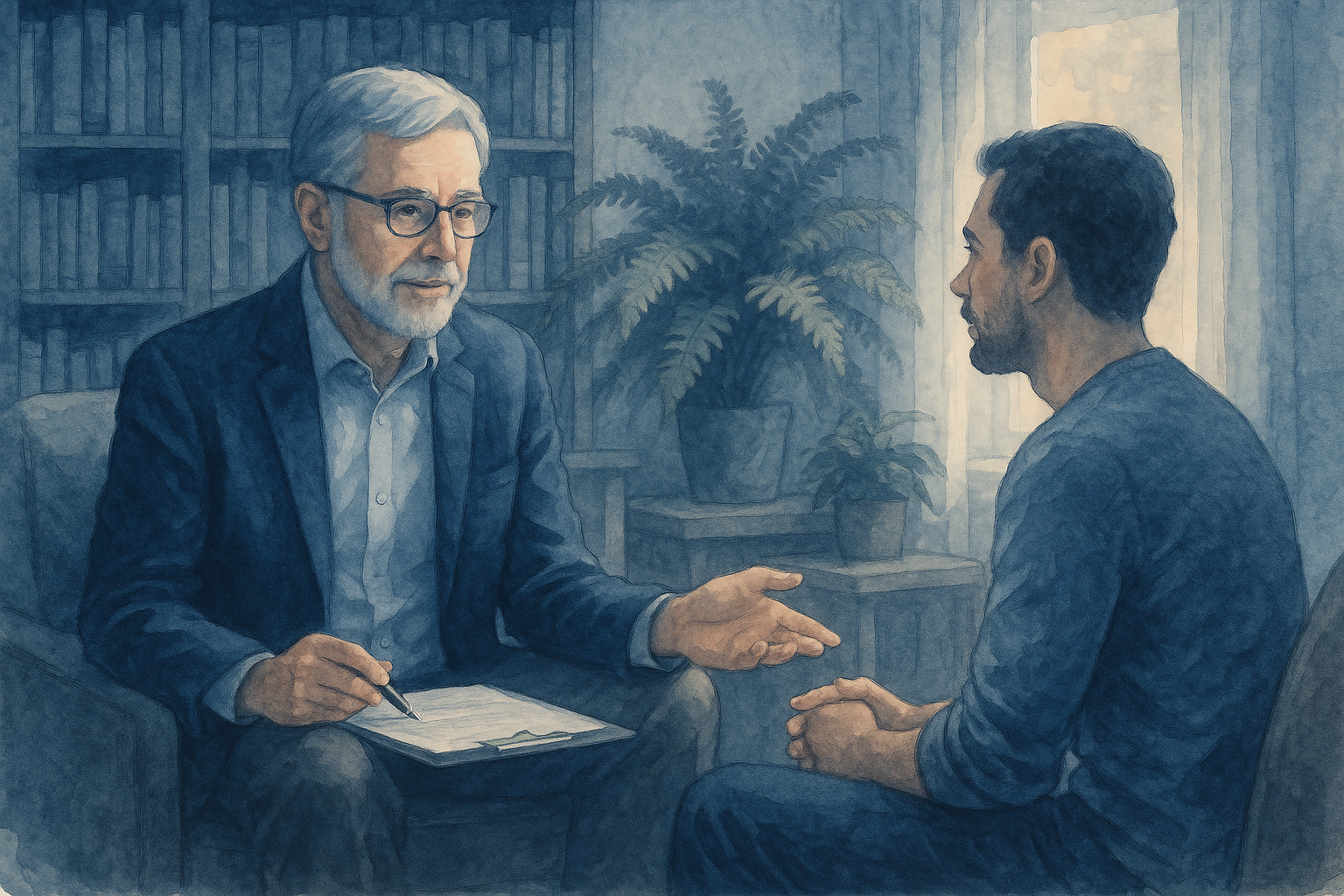

FAQs: Frequently Asked Questions About CBT
Cognitive Therapy (CT) is a system of psychotherapy designed to help a client identify and challenge negative patterns of thinking in order to alter distressing and/or dysfunctional emotions and behaviors. CT is one of the main therapeutic approaches within the larger group of Cognitive Behavioral Therapies (CBT). CT was first expounded in the 1960s by American psychiatrist Aaron T. Beck after he had become disillusioned with long-term Psychodynamic Therapy, which is based on gaining insight into unconscious conflicts. He devoted himself to developing an effective, short-term therapy that targeted the largely conscious streams of negative thoughts associated with depression, anxiety, and other problems. During this period, Albert Ellis was working independently on similar ideas and developed the other main type of CBT, Rational Emotive Behavior Therapy (REBT).
The late Dr. Beck has been honored not only for his theoretical and technical development of CT, but also (and I think most especially) for his organized efforts to research the effectiveness of CT in treating depression, anxiety, and a host of other behavioral and emotional problems. Largely to his credit, CT is distinguished from all other forms of talk therapy by the fact that it has received the most scientific support in the history of psychotherapy.
A Personal Note from Ponte Vedra Psychologist Dr. Garamoni:
I had the honor of being invited by Dr. Beck to deliver a lecture with my colleague, Dr. Robert M. Schwartz, on our "States of Mind Model" to his students at the University of Pennsylvania. An illness prevented us from delivering the prepared lecture, but we had the opportunity to meet Dr. Beck at his home and discuss our theory with him over lunch. I was very flattered by his interest in our theory of balanced thinking. I was also quite impressed with the depth and breadth of his knowledge of the whole field of psychotherapy. As a lifelong student of philosophy, I admired his grasp of the philosophical underpinnings of the science of psychology.
Cognitive therapy is based on the cognitive model of emotions. The central idea behind the cognitive model of emotions can be traced back to Ancient Greek and Roman philosophers: The way we perceive situations influences how we feel in these situations. It is common knowledge that the same event will evoke different emotional reactions in different people. Consider the wide range of emotional responses to a movie in a crowd of people exiting a movie theater. It is also common knowledge that similar events will evoke different emotional reactions in the same person at different times. Consider how your own feelings have changed over time about something--a book, a person, etc.
Cognitive therapy has a strong appeal to most clients because the cognitive model of emotions appeals to common sense. With a bit of coaching, clients can personally test and confirm the theory through introspection. By monitoring their thoughts and feelings in various situations, they can see the connections between them. A client can be led to see that anyone who thinks what the client was thinking in a specific situation would, of necessity, feel what the client felt in that situation.
Here is a personal example from an experience I had on an African safari. I was in a Range Rover with other people when we slowly approached and quietly parked next to a pride of lions sprawled under a shady tree. One woman said she was thinking that the lions might somehow get into the vehicle and maul her; so she felt fear. A man said he always wanted to see lions in the wild, but this was even better than he ever imagined: So he was in awe. A teenager said he had seen lions the other day and wanted to see something new and different, so he was feeling bored. Another young fellow expressed the idea that it wasn't right to disturb the lions in their natural habitat; so he felt anger. The woman sitting next to him put her hands over her mouth, widened her eyes, and said she accepted her responsibility for disturbing these lions: She felt guilt. How do we explain so many different emotions in response to the same situation? It is not the situation itself that directly affects how anyone feels, but rather, one's thoughts in that situation.
When we are distressed, we often do not think clearly, and our thoughts are biased or distorted in some way. We are not wired like Dr. Spock, who seems to think clearly and logically all the time. We can and do jump to conclusions. We can and do take things personally when we shouldn't. We can and do make mountains out of molehills. We can and do read someone's mind as if we know what that person is thinking when, in fact, we really don't.
The bad news here is that we are all too prone to biases and errors in our thinking. The good news here is that we can usually catch ourselves when we make these mistakes and correct them before we get into too much trouble. And the best news of all? We can be trained to do this and become even better at it.
Cognitive therapists help clients identify their distressing thoughts and evaluate the realism of these thoughts. Clients learn to identify and correct distortions and biases in their thinking. When clients think in more realistic and balanced ways, they usually feel better. This emotional improvement is rewarding and provides the motivational fuel to power reality-testing in other distressing situations.
A notable strength of cognitive therapy is the emergence of a substantial and rapidly expanding body of theory and research to support the cognitive model of emotions. As a scientist-practitioner, I'm heartened to know that these advances have been made by independent researchers who study cognitive appraisal processes in emotion, but have little, if anything, to do with cognitive therapy. That makes the case for the cognitive model and cognitive therapy even stronger in my mind.
Two blog posts utilize metaphors to illustrate the choices – behavioral and cognitive – we can make to manage rumination and worry. One blog uses the comparison of redirecting your attention to using a remote control to change channels on your TV, likening your mind to a multiview TV screen Your Mind is Like a Multiview TV Screen. In a similar vein, the second blog draws an analogy between redeploying your attention and changing seats in a multiplex movie theater Your Mind Is Like a Multiplex Theater.
“Psychotherapy” is an umbrella term that refers to a large number of treatment methods, each rooted in different theories about the causes of psychological health and illness. There are more than 250 kinds of psychotherapy, but only a few have found mainstream acceptance. Many kinds of psychotherapy are variations on well-known approaches of earlier theorists. Most therapies can be classified as (1) psychodynamic, (2) humanistic, (3) behavioral, (4) cognitive, or (5) eclectic.
Cognitive therapy differs from other forms of psychotherapy in the following ways.
Cognitive therapy is one of the few forms of psychotherapy that has been scientifically tested in over four hundred clinical trials and found to be effective for many different disorders. No other form of therapy has been researched as thoroughly as cognitive therapy.
Cognitive therapy is usually focused more on the present than the past. This emphasis on the present stands in contrast with traditional psychodynamic therapies, which are in some way based on the work of Sigmund Freud, the founder of psychoanalysis. In general, psychodynamic therapists stress the importance of exploring one's childhood and past experiences. There is a place in cognitive therapy for identifying and modifying dysfunctional core beliefs, rules, and assumptions that clients often acquire during childhood. However, the emphasis is more on solving present problems and preventing future ones.
Cognitive therapy is usually concerned more with conscious experience than unconscious material or observable behavior. The cognitive therapist emphasizes the connections among the three major components of conscious experience: thoughts, feelings, and behavior. This contrasts with the psychoanalyst's emphasis on unconscious material (drives, motives) that needs to be illuminated and interpreted to resolve intrapsychic conflicts. The cognitive therapist's emphasis on subjective thoughts and feelings also differs from the behavioral therapist's focus on objective, observable behavior.
Cognitive therapy is usually more time-limited than open-ended, as is the case with some systems of therapy. This is especially true of classical psychoanalysis, which can take several years before an analysis is considered complete. In contemporary psychoanalysis, the duration of treatment is typically between one and four years, with sessions held one or two times a week. Some psychoanalytically oriented therapists treat patients in 30 sessions or fewer.
Cognitive therapy is usually more problem-solving oriented than some other therapies. Much of what the client does in cognitive therapy is solve current problems. This emphasis on problem-solving contrasts with the use of free association in classical and contemporary psychoanalysis. The cognitive therapist's explicit focus on problem-solving also contrasts with the humanistic therapist's focus on guiding clients toward personal realizations and insights by creating a caring, supportive atmosphere in which clients are encouraged to take responsibility for their lives, accept themselves, and recognize their potential for growth and change.
Cognitive therapy is usually more structured than many other therapies. Throughout therapy, most sessions have a predictable and prescribed structure:
Getting a brief update since the last session, including a rating of mood and medication check, if necessary
Bridging from the previous to the present session
Setting the agenda
Reviewing homework
Discussion of issue(s) relevant to therapeutic goals
Setting new homework
Providing a summary
Eliciting feedback
An overarching and explicit goal of cognitive therapy is to use sessions as opportunities to teach the client to become his or her own cognitive therapist. Clients are educated in the cognitive model of emotions--the basic idea that what we feel is determined by what we think. Clients learn specific skills in cognitive therapy that they can use for the rest of their lives. These skills involve:
Identifying and correcting distortions and biases in their thinking
Modifying core beliefs, rules, and assumptions that give rise to these dysfunctional thinking patterns
Relating to others in more effective ways
Identifying and changing dysfunctional behaviors
Cognitive therapy deliberately fosters an explicit collaborative relationship between the therapist and the client. The therapist models this relationship from the very first session and continues to foster a collaborative working relationship throughout therapy. One useful analogy that I use is the relationship between a pilot and a navigator. The client is the pilot who is in charge of choosing where they want to go — the goals of treatment. The therapist is the navigator who charts a course that will most likely take the client to these destinations as quickly as possible with the least amount of turbulence — the treatment plan. Both the therapist and the client have a responsibility to provide input to the treatment plan, set the agendas for each session, and determine when to terminate therapy.
The simple answer to this question is this: "Cognitive therapy is one of the few forms of psychotherapy that has been scientifically tested and found to be effective in over four hundred clinical trials for many different disorders." (Beck, 2009).
No other form of therapy has been researched and supported as thoroughly as cognitive therapy. A substantial body of research has consistently supported the short-term and long-term benefits of cognitive therapy.
Now it is pretty easy to ask the question, "Does cognitive therapy work?" But it is quite another thing to answer this question with scientific research.
Several years ago, psychologists A. Butler and J. Beck (2000) conducted a landmark review of the available scientific literature on cognitive therapy to answer a more focused and refined question:
How effective is cognitive therapy, for which disorders, and compared to what? Butler and Beck reviewed 14 meta-analyses that investigated the efficacy of cognitive therapy, involving a total of 9,138 subjects across 325 studies and 465 specific comparisons related to 14 disorders or populations. (That is a lot of data!) Meta-analysis is a statistical approach that enables researchers to combine the results of multiple studies and present these results in a standardized unit known as an effect size. In their review, they examined how cognitive therapy outcomes compared to the outcomes of various control groups in terms of their effect sizes. Without getting into the statistical details, here are the main conclusions of their study:
Compared to no-treatment, wait list, and placebo controls, cognitive therapy is substantially superior for adult and adolescent unipolar depression, generalized anxiety disorder, panic disorder with or without agoraphobia, social phobia, and childhood depressive and anxiety disorders.
Compared to no-treatment, wait-list, and placebo controls, cognitive therapy is moderately superior for marital distress, anger, childhood somatic disorders, and chronic pain.
Cognitive therapy is somewhat superior to antidepressant medications in the treatment of adult unipolar depression.
One year after treatment discontinuation, depressed patients who had been treated with cognitive therapy had half the relapse rate of depressed patients who had been treated with antidepressant medication (30% versus 60%).
In the small number of direct study comparisons, cognitive therapy is moderately superior to supportive/nondirective therapies for adolescent depression and generalized anxiety disorder.
Cognitive therapy is equally effective as behavior therapy in the treatment of adult depression and obsessive-compulsive disorder.
As a scientist-practitioner in evidence-based practice, I select and utilize therapies that have the most empirical support and are grounded in well-developed theoretical frameworks. The research summarized here is pretty impressive. That is why I specialize in cognitive therapy for depression and cognitive therapy for anxiety.
As an undergraduate majoring in philosophy at the University of Wisconsin, I was convinced that ideas have a profound impact on the lives of individuals and the course of history. I learned to recognize that the life of each human being depends on what that individual knows, values, and does: Our beliefs, values, and actions determine whether we live or die, flourish or flounder, and experience happiness or misery along the way. I also learned to appreciate that the rise and fall of civilizations can be explained by the fundamental beliefs and values that guided the actions of influential figures in the history of these civilizations.
As a student of philosophy, I was also exposed to ancient and modern philosophical theories of emotion, particularly those with moral implications due to their influence on our judgments, choices, and decisions. I came away from these philosophical reflections on human nature with a working model of the relationship between thoughts, emotions, and behavior: What we think in any given situation influences but does not necessarily determine what we feel in that situation, and what we feel in that situation influences but does not necessarily determine what we do in that situation, and what we do in that situation influences but does not necessarily determine what we get out of that situation. We can change how we feel in a situation by choosing to question and alter our thoughts about it. By doing so, we can override our emotional impulses to act in that situation by focusing on the foreseeable consequences of our actions.
The fundamental philosophical insight here is that we have the freedom and the consequent responsibility to think about our thinking as it affects our emotions and behavior--to reflect constantly upon whether our thoughts need to be more realistic so that what we feel, what we do, and what we get out of life is aligned as fully as possible with the facts of reality.
During the late 1960s, I was introduced to three very similar cognitive theories of emotion, independently developed by three intellectual giants in the field of emotion psychology: Magda Arnold, Nathaniel Branden, and Albert Ellis. Their theories, albeit thinly supported by any research at the time, convinced me more than ever that what we feel must be caused (primarily) by what we think.
The point of all of this is this: I have been reflecting on the connections between thoughts and emotions for a long time now, and I have years of experience using cognitive models of emotions to help people understand and overcome emotional problems.
With my philosophical background now in the rearview mirror, I would like to address the specific question about my training and experience in cognitive therapy.
I have been practicing various forms of cognitive behavioral therapy since the early days of my training in 1983. I have used these techniques to help people suffering from a wide range of problems, including major depression and other mood disorders; generalized anxiety, panic, phobias, PTSD, and other anxiety disorders; anger control and stress management problems; marital and family relationship problems; and sexual difficulties.
I have explicitly been practicing Beck's Cognitive Therapy for over 20 years. I completed a three-year training program in Cognitive Therapy at the University of Pittsburgh School of Medicine's Cognitive Therapy Clinic from 1988 to 1991. This program was specifically designed to ensure that therapists were highly trained to provide the quality of cognitive therapy necessary to research the effectiveness of cognitive therapy. During that period, I met these standards and managed a three-year study of clinically depressed patients treated with Cognitive Therapy. Based on this study, I co-authored several peer-reviewed articles on cognitive therapy and depression.
I conduct an initial evaluation interview to gather comprehensive information about each client, including:
presenting problems, issues, and symptoms
history of these complaints and any other behavioral health problems
history of any treatments (self-help or professional; effective and ineffective)
history of marital and family relationships
educational history
employment history
health history
family behavioral health history
sources of stress and support
personal strengths and limitations
treatment goals
Clients can expect to spend between two and four hours in the interview process, which is often conducted across two or more visits. There are clear benefits to this process:
The intake gives me a great deal of clinical information so that therapy can get off to a faster start with a preliminary diagnosis and treatment plan.
Individualized decisions can be made for clients more quickly.
The client has enough time to ask me questions to determine if the course of treatment offered is a good fit and we are "in sync" with one another.
I can determine whether other forms of care are required and whether referrals elsewhere are indicated.
Typically, clients in cognitive therapy meet with me for 45-to 60-minute sessions. Clients usually spend 5-10 minutes filling out short questionnaires that help me (a) monitor how they are feeling and (b) get feedback on how well the sessions are progressing. Clients typically spend about an hour on the session and the paperwork.
Most clients attend one session per week. Sessions are usually held on the same day and time each week. Sometimes, however, the session times may vary to accommodate the client's work or travel schedule.
If a client's problems are urgent and warrant more frequent sessions, as is often the case at the beginning of treatment, it is usually possible to meet with me twice per week. On the other hand, if we think it is time to taper off the sessions toward the end of therapy, sessions may be scheduled every other week.
Some clients may prefer to meet less frequently due to financial constraints. I usually advise against a diluted course of treatment because, in my experience, it is not as effective. A lot can happen in a client's life over two weeks. The time spent in a session getting caught up on this and getting back "in sync" is that much less time available for therapy. In these situations, I instruct my office manager to make financial arrangements (such as credit cards and payment plans) so that the client can receive an affordable and adequate course of therapy.
I will typically have you fill out forms to assess your mood before each session begins. I have patients in cognitive therapy complete the Beck Depression Inventory, the Beck Anxiety Inventory, and other questionnaires repeatedly throughout treatment to help give both of us an objective way of assessing their progress. One of the first things I usually do in a therapy session is review these questionnaires to determine how you've been feeling this week, compared to other weeks. This is what I call a "mood check." Just like a nurse checks your physical "vital signs"-- your weight, temperature, and blood pressure--I check your psychological "vital signs"-- depression, anxiety, and other symptoms.
Early in each session, I will ask you to identify the problem you'd like to address, what happened during the previous week that was significant, and what might happen during the upcoming week that could also be important. I will also suggest items to be put on the agenda. Then I will make a bridge between the previous session and this week's session by asking you what seemed important that we discussed during the past session, what homework assignments you were able (or unable) to complete during the week, and whether there is anything about your therapy that you would like us to change.
Most of the session will be spent discussing the problems we put on the agenda. I will help you engage in problem-solving and reality-checking your thoughts in problematic situations. I will help you learn these skills and other techniques to improve your well-being by gaining more control over your thinking and behavioral patterns. I will usually point out how to make the best use of what you've learned during the session in the coming week.
Toward the end of the session, we will work together to summarize the "take-away" points of the session. I often will ask you questions to get feedback on our work during the session, such as:
What was helpful?
What was not helpful?
Did anything bothersome happen?
Did I misunderstand you?
Is there anything you'd like to see changed?
You will come to see that we need to be very active in cognitive therapy sessions.
The client and I jointly decide on the planned length of therapy, based on the client's goals, values, needs, and other personal factors. Some clients remain in treatment for a brief period, completing a course of six to eight sessions. Different clients with long-standing problems and numerous treatment goals choose to stay in therapy for many months. The length of therapy varies widely from client to client. The typical treatment plan for cognitive therapy usually calls for 12-24 sessions spread over three to six months.
After a few sessions with a client, I usually have a good idea of how long it will take to achieve the client's goals. During therapy, goals may be added to or removed from the treatment plan, necessitating adjustments to the estimated treatment duration.
Regardless of the length of treatment, the final session should be planned so that we can review the progress you have made in therapy, discuss any remaining work that needs to be done, arrange for a follow-up visit, and, most importantly, say "goodbye." Some clients need to go through and benefit from a positive experience in terminating a therapeutic relationship because they have never learned to end any relationship without unhealthy consequences. A well-managed termination of therapy brings a much-needed sense of closure to a personal relationship. It yields a better long-term outcome for clients than an abrupt or unannounced termination.
I recommend to many clients that they have "booster sessions" three, six, and twelve months after therapy is ended. Let's say, for example, that a client completes a 16-week course of therapy sessions, and we determine that sufficient progress has been made to conclude therapy. At that point, the client can schedule one or more follow-up sessions. These booster sessions serve as a “tune-up” to help clients stay on track, address any residual problems, refresh the skills they learned in therapy, and maintain their long-term gains from treatment.
The progress you make during therapy is best measured by the progress you make outside of my office. I will help you select and carry out "homework" assignments that help you make progress in the "real world." These assignments will show you how to apply ideas and skills between sessions. This process is designed to equip you to become your own therapist after your work with me is complete.
I assign a variety of homework types. Some self-help assignments involve learning to observe your thoughts, feelings, and actions in various situations, allowing you to become more aware of the connections among these aspects of your experience. Other assignments ask you to change your ways of thinking about some issues so that you feel more positive. Some projects involve reading to gain insight into your difficulties and learn how to improve your life.
I often ask clients to conduct what are called “behavioral experiments.’ Here, the client is prompted to consider new approaches to an old problem. The client then evaluates options and selects one to put into action. The client predicts the outcome and then documents the results. As a result of behavioral experiments, clients often learn that engaging in new, challenging, or uncomfortable activities can bring about dramatic and positive changes in their lives.
Homework is highly recommended because it can help you progress in therapy if you truly give it a try. Research on cognitive therapy homework shows that clients who wholeheartedly complete these assignments make faster, more long-lasting progress than those clients who, for whatever reason, elect not to involve themselves with the homework.
I strive to create an environment where my clients feel free to explore and learn without worrying about being criticized by me. I will not judge you if you are unwilling or unable to complete any of these assignments.
In my experience, most clients experience noticeable relief from their symptoms within four weeks of cognitive therapy, provided they have been regularly attending sessions and completing the prescribed homework assignments daily between sessions.
Clients also see their improvement objectively reflected in the scores on the symptom inventories they complete regularly: These scores typically begin to drop within several weeks.
Research shows that cognitive therapy, in most cases, can be highly effective without the need for medication. Most of my depressed and anxious clients are treated without any medication at all. My results with cognitive therapy appear comparable to those published in the scientific literature. The majority of clients achieve complete remission (60-70% are "responders"); a minority feel significantly better but still experience some bothersome residual symptoms (15-20% are "partial responders"); and a smaller minority experiences slight improvement (10-15% are "non-responders").
Some research suggests that a combination of cognitive therapy and an appropriate medication can be an effective treatment. In my experience, some people with mood and anxiety disorders do respond better to a combination of medication and cognitive therapy. If you are taking medication or would like to start taking medication, I would be happy to consult with your physician.
If you are not taking medication and do not want medication, I may nevertheless advise you that we should assess, after five to six weeks, how much you've progressed in cognitive therapy. At that time, we can discuss whether you might do well to have a psychiatric consultation to obtain more information about the advantages and disadvantages of medication. I can help you consider the benefits and drawbacks of adding medication to your treatment plan. If you wish to start medications along with cognitive therapy, I can help arrange a medical evaluation by your physician or a psychiatrist. I can also help by communicating with them about your response to medication and any side effects.
Yes, I provide individual cognitive therapy for older adolescents on a case-by-case basis. I often use cognitive therapy techniques in family therapy with children and youth while one or both parents are present. The idea here is to "teach the teacher"-- meaning that I coach parents on how to coach their children to discover and correct dysfunctional thinking patterns and conduct behavioral experiments.
I use cognitive therapy to conceptualize and treat a broad spectrum of problems presented by couples and families. However, my approach to treating these issues is usually eclectic -- meaning that I draw on multiple perspectives in conducting couples counseling or family therapy. Another way of saying this is that I view problems through a biopsychosocial framework, as I need to be on the lookout for any biological, psychological, and social/cultural factors that might contribute to a problem, as well as its solution.
I have conducted group cognitive therapy for people suffering from bipolar disorders. This service is currently not available.
Generally, I advise against enrolling in more than one ongoing course of individual therapy. Therapists often have different orientations to treatment; therefore, there is a foreseeable risk that a client will receive conflicting advice, which can be confusing and potentially cause more harm than good. Clients require consistent feedback and direction to maximize the benefits of treatment. Having two or more therapists at the same time can undermine the ultimate goal of having the client become self-reliant. Cognitive therapy works well, in part, because cognitive therapists teach their clients the skills they need to have confidence in themselves. Depending on multiple therapists does not foster this sense of self-sufficiency.
In some cases, clients may need additional healthcare professionals to perform a role other than that of an individual therapist. If you need medications, you would see a physician who prescribes and monitors whatever psychiatric medications you need to take. In this situation, you would want to give me and your prescribing physician permission to talk to each other, so we can discuss your treatment needs and coordinate plans for your care.
Clients may also benefit from a different modality of therapy while receiving cognitive therapy. For example, while seeing me for cognitive behavioral therapy, a client may benefit from group therapy, family therapy, marriage counseling/couples therapy, or even some support group (e.g., Al-Anon).
People sometimes call me to seek treatment for a friend or relative. If you are calling to schedule an appointment for someone over the age of 18, I will not be able to make an appointment for anyone other than yourself. I will, of course, be willing to listen to your concerns, but the person you are concerned about must be the one to call and schedule an appointment. Once the appointment is scheduled, I cannot share any further information with you unless the client gives written permission. Information about therapy is private, and the confidentiality of this information is protected by law.
I appreciate that you may be frustrated because someone you love or care about refuses to call for an appointment or seek treatment. Your options are limited. First, you can arrange a "consultative appointment" with me to seek advice on how you might deal more effectively with this person. Alternatively, you can begin therapy yourself if your life has been adversely affected by this person, and you are exploring ways to improve your situation. Finally, you can try to obtain the individual's cooperation in entering treatment by offering to attend therapy together.
A Whole Life Lived Well is a Work of Art
–Dr. Garamoni
Fast Facts Footnote

WHO we are
At Ponte Vedra Psychologists, we are a compassionate and experienced team led by Dr. Gregory Garamoni, Ph.D., a licensed clinical psychologist with over 30 years of experience. We serve individuals, couples, and families navigating emotional, relational, or psychological challenges—with care that emphasizes clinical excellence, transparency, and personal respect. Based in Ponte Vedra Beach, we also support clients from across Northeast Florida, including Jacksonville Beach, Neptune Beach, Atlantic Beach, Jacksonville, Orange Park, Nocatee, Palm Valley, and St. Augustine.

WHAT we do
We provide therapy for anxiety, depression, relationship difficulties, and other emotional concerns. We also offer life coaching to support personal development, decision-making, and forward momentum, as well as psychological assessments for a wide range of cognitive, emotional, and educational needs—including specialized gifted IQ evaluations. Our approach blends evidence-based methods like cognitive-behavioral therapy with individualized strategies that promote insight, clarity, and lasting change.
WHERE we are
Our office is located in the Sawgrass Village Shopping Center in Ponte Vedra Beach, Florida. We offer a discreet and welcoming environment in the heart of the community, making it easy for clients from throughout the First Coast—including Jacksonville Beach, Neptune Beach, Atlantic Beach, Jacksonville, Orange Park, Nocatee, Palm Valley, and St. Augustine—to access care.
Ponte Vedra Psychologists
2304 Sawgrass Village Drive
Ponte Vedra Beach, FL 32082
(In Sawgrass Village Shopping Center, our office has a private exterior entrance on the 3rd floor of the professional office building, Park Place.)
🧭 Get Directions on Google Maps
WHEN we're open
Appointments are available Monday through Thursday, from 9:00 a.m. to 8:00 p.m. We’re flexible, so you can find a time that works best for your life and schedule—whether you're seeking therapy, life coaching, or psychological evaluation.
WHYchoose us
Choose Ponte Vedra Psychologists for our deep clinical experience, our warm and respectful atmosphere, and our unwavering commitment to your long-term well-being. We value transparency, privacy, and personalized care—offering therapy, life coaching, and expert psychological testing to meet you wherever you are in your journey and help you take confident steps forward.
HOWto connect
We invite you to call us at (904) 285‑4229 to schedule a confidential consultation, or visit our Secure Contact Form page to send a message or request an appointment online.
Our office is located at:
Ponte Vedra Psychologists
2304 Sawgrass Village Drive
Ponte Vedra Beach, FL 32082
(In Sawgrass Village Shopping Center, our office has a private exterior entrance on the 3rd floor of the professional office building, Park Place )
🧭 Get Directions on Google Maps
Availability
We are currently accepting new clients for both in-person and online sessions. Whether you're local to Ponte Vedra Beach or connecting from elsewhere in Florida, we’re here to support you with flexible, confidential care.
Please note that all appointments must be scheduled in advance. We do not accept walk-in visits, as unplanned arrivals may disrupt our scheduled sessions.
Whether you're reaching out for therapy, life coaching, or psychological assessment, we're here to support you with responsive and compassionate guidance every step of the way.
Find Ponte Vedra Psychologists onthese directories and social media:
